
You hit publish on your tenth post and check the subscriber count for the third time that hour. It says 87. You started at 12, most of them friends and one former coworker who unsubscribed two weeks later. The math doesn't feel like it's working, and everyone in your feed already seems to have thousands of people reading them.
That gap between "just started" and "real newsletter" is where most Substack writers quit, usually somewhere between subscriber 40 and subscriber 300. The good news is the gap is smaller than it looks, and it mostly comes down to a short list of decisions repeated often enough. How do you get your first 1,000 Substack subscribers without burning out or buying fake growth? The publications that make it past this stage share a handful of habits, and none of them require an audience you don't already have.
This piece walks through what actually moves a Substack from a few dozen subscribers to four figures: the niche decision that determines whether people can describe your newsletter to a friend, the posting frequency the numbers actually support, and where the real subscriber flow comes from once you stop guessing and start tracking what works.
Table of Contents
- Why the First 1,000 Is the Hardest Growth Stage
- Pick a Niche You Can Write About for a Year
- The Posting Frequency That Actually Moves the Needle
- Substack Notes Are Your Fastest Discovery Channel
- Getting Recommended by Other Newsletters
- Cross-Promotion and Guest Posts Done Right
- Turn One Piece of Writing Into a Week of Content
- What to Expect at 0, 100, 500, and 1,000 Subscribers
- The Tools That Remove the Friction
Why the First 1,000 Is the Hardest Growth Stage
Growth on Substack isn't linear. It's closer to a series of thresholds. Below a few hundred subscribers, almost nothing compounds on its own: your posts don't have enough readers to generate meaningful restacks, Substack's own recommendation engine has little signal to work with, and word of mouth needs a bigger base to travel. Past 1,000, the same newsletter starts benefiting from things that didn't exist earlier: subscribers recommending you to their own readers, enough engagement history for Notes to get shown to people who don't follow you yet, and enough back catalog that new readers can binge instead of waiting for the next post.
None of that shows up for free. It shows up because a publication kept publishing long enough for those mechanisms to kick in. The writers who get stuck usually aren't doing anything wrong, they're just judging week four by the standards of month six.
Practical rule: Don't evaluate a Substack's growth week to week for the first three months. Evaluate whether you're still publishing on schedule. Growth is a lagging indicator of consistency, not the other way around.
If you're serious about crossing this threshold, WriteStack is built around exactly this stretch: getting a publication from occasional posting to a schedule it can actually hold, with the Notes and analytics work that used to eat an evening now taking twenty minutes.
Pick a Niche You Can Write About for a Year
Most advice about finding a Substack niche focuses on market size. That matters less than a simpler test: can you describe what you write about in one sentence, and does that sentence make someone want the next issue?
Narrow beats broad
"A newsletter about marketing" doesn't give a reader any reason to subscribe over the thousand other marketing newsletters. "A newsletter that reviews one B2B landing page every week and rewrites the headline" does. Narrow topics are easier to be known for, easier to recommend by name, and easier for you to keep writing about without running out of ideas by week six.
Test the angle before you commit
Before locking in a niche, write five headlines you'd want to publish under it. If three of the five feel like a stretch, the topic is too narrow or too far from what you actually know. If all five feel obvious and a little boring to you, it's probably too broad and too crowded. The right zone produces headlines that feel slightly ambitious to write, not impossible and not trivial.
This test also catches a mistake that's easy to miss early on: picking a niche because it sounds impressive rather than one you'll still want to write about in month eight. A newsletter about "the future of work" reads well on a bio page and runs out of fresh angles fast. A newsletter about "what it's actually like managing a remote team of five" has a narrower ceiling but a much longer runway, because the writer has a direct, ongoing source of material instead of a topic they have to keep researching from the outside.
The Posting Frequency That Actually Moves the Needle
Every growth guide says "post consistently." Almost none of them say what consistent actually means in practice, because most writers giving the advice never looked at the numbers across more than their own newsletter.
What "consistent" really means in the data
We pulled posting frequency and engagement across more than 50,000 active Substack publications from WriteStack's own dataset (publications with at least 10 posts and a month of activity). The median publication posts a little over once every two weeks. Publications posting twice a week or more average about 28% more reactions per post than publications posting less than once a week (24.8 average reactions versus 19.4). That's not a huge gap in absolute terms, but it's the difference between a post that quietly exists and one that has enough activity to get surfaced to people who don't already subscribe.
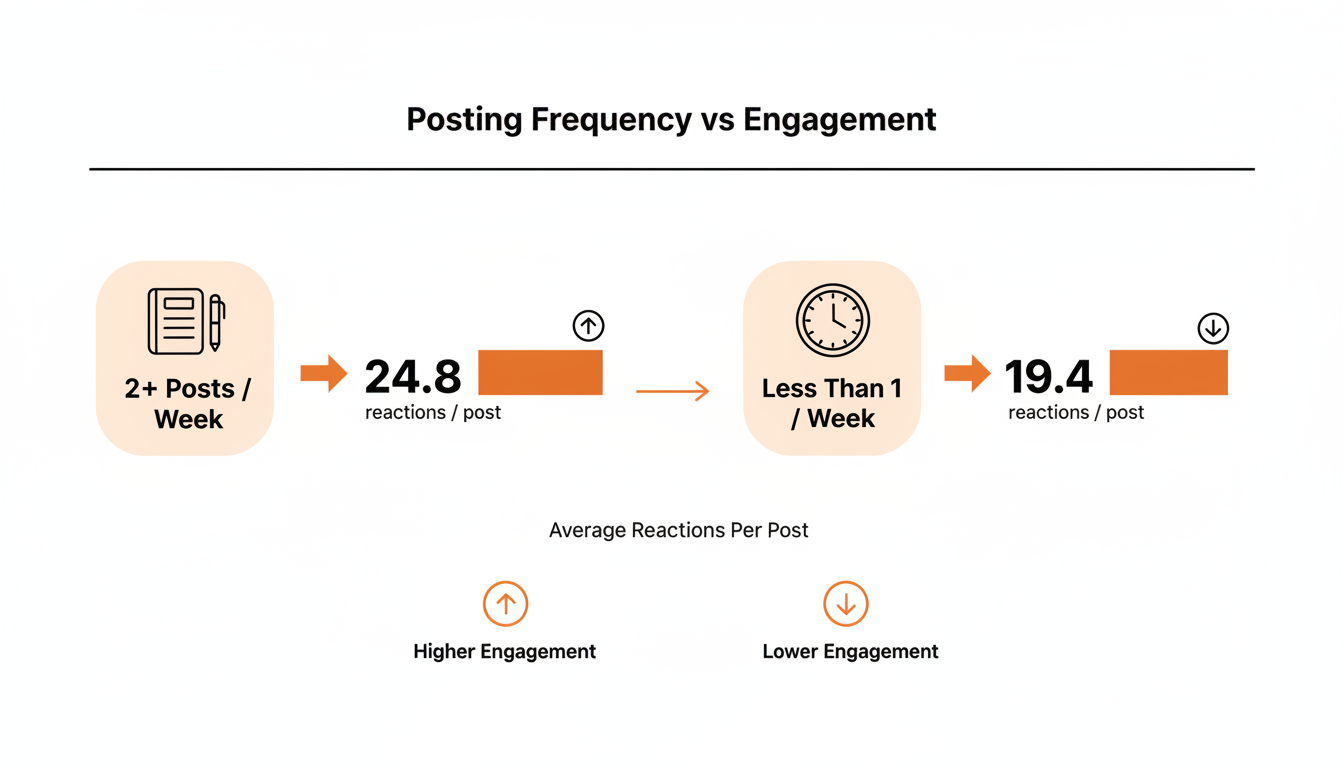
Practical rule: Twice a week is the realistic floor if you want the engagement flywheel to start turning. Once a week works, but expect the climb to 1,000 to take noticeably longer.
If twice a week feels impossible on top of everything else, the honest fix usually isn't writing faster. It's writing longer pieces less often and using WriteStack's heatmap to find the exact days and times your specific audience is actually online, so every post you do publish reaches more of the people already following you instead of getting buried in their inbox at the wrong hour.
Substack Notes Are Your Fastest Discovery Channel
If you're choosing between spending an hour writing one more paragraph of your next post or spending that hour on Notes, choose Notes. Notes are Substack's short-form feed, and they're currently the fastest way for a new publication to get in front of people who've never heard of it.
One creator tracking their own growth from 100 to 1,000 subscribers over 90 days reported that 90% of new subscribers came from the Substack app and Notes, not from search or social links elsewhere, and that a consistent Notes habit brought in 10 to 30 new subscribers a day once the routine was in place. That's one publication's experience, not a universal number, but it lines up with how the platform's discovery surface actually works: Notes get shown inside Substack's own feed, to people who don't subscribe to you yet, in a way full posts rarely do until you already have an audience.
📅 Struggling to stay consistent on Substack?
WriteStack's Smart Scheduling lets you batch and queue Notes in minutes. Grow on Substack without burning out.
Explore Smart SchedulingWhat to actually post
The Notes that work aren't announcements ("new post is up"). They're a standalone thought, a specific number from your own work, a short opinion, or a screenshot with one line of context. Anything that would stop a scroll on its own, without needing the newsletter behind it for context.
How much time this takes
Daily Notes sound like a second job until you stop treating each one as its own writing task. Every post you publish contains four or five ideas that can stand alone as a Note. WriteStack's Note generator reads what you've already published and drafts Notes in your own voice from it, rather than starting from a blank prompt, so the daily habit becomes editing five short drafts instead of writing five things from nothing.
Set up your first week of Notes once, on a Sunday, and schedule them out instead of trying to remember to post fresh every morning. The habit survives a bad week that way. Willpower alone usually doesn't.
Getting Recommended by Other Newsletters
How Substack recommendations work
When a reader subscribes to your newsletter, Substack can show them a list of other newsletters to add, curated by writers who've chosen to recommend each other. A single recommendation from an established writer can hand a new publication a steady trickle of subscribers for months, because it sits in front of every person who subscribes to that writer going forward, not just once.
How to actually earn one
Recommendations from writers with huge audiences are hard to get and often don't convert as well as you'd expect, since their readers may not overlap with your niche. The better target is writers with somewhere between 500 and 10,000 subscribers in a topic adjacent to yours: reachable, likely to say yes if you've genuinely engaged with their work first, and close enough in audience that the readers who cross over actually stick around.
Reach out to a handful of them individually rather than sending one templated message to twenty people. Read their last three posts, comment on something specific, and only then ask. Expect roughly a third to say yes if you did the first part properly.
Outreach like this tends to fall off the list the moment a normal week gets busy, since it doesn't have a deadline the way a post does. Treat it the same way you'd treat Notes: block twenty minutes on a specific day, send three messages, and move on. A small, repeated habit beats a big one-time push that never happens because the week filled up first.
Cross-Promotion and Guest Posts Done Right
A guest post or a co-written piece with another writer in your space does two things a solo post can't: it puts your writing in front of an audience that already trusts the person you're writing with, and it gives that writer a reason to tell their readers about you by name, not just as a recommendation on a list.
Pick partners at a similar stage to you, not writers with ten times your subscriber count who have nothing to gain from the trade. Propose something specific (a joint post answering the same question from two angles, or a short interview) rather than a vague "want to collaborate sometime?" message. Specific asks get answered. Vague ones get ignored, politely or otherwise.
The part people don't expect: most of what slows this process down isn't writing the post, it's the coordination and the tracking. WriteStack's Fans view shows which of your existing subscribers are your most engaged readers, the ones most likely to restack a guest post or introduce you to someone else, so outreach doesn't start from a cold list. Pair that with cross-publication benchmarks that show whether your restack rate is actually competitive for a newsletter your size, not just better than your own post from last week, and an Activity Center that keeps every reply, comment, and mention in one place instead of five browser tabs.
Turn One Piece of Writing Into a Week of Content
The writers who hit 1,000 subscribers fastest usually aren't writing more raw material than everyone else. They're getting more use out of each piece they write.
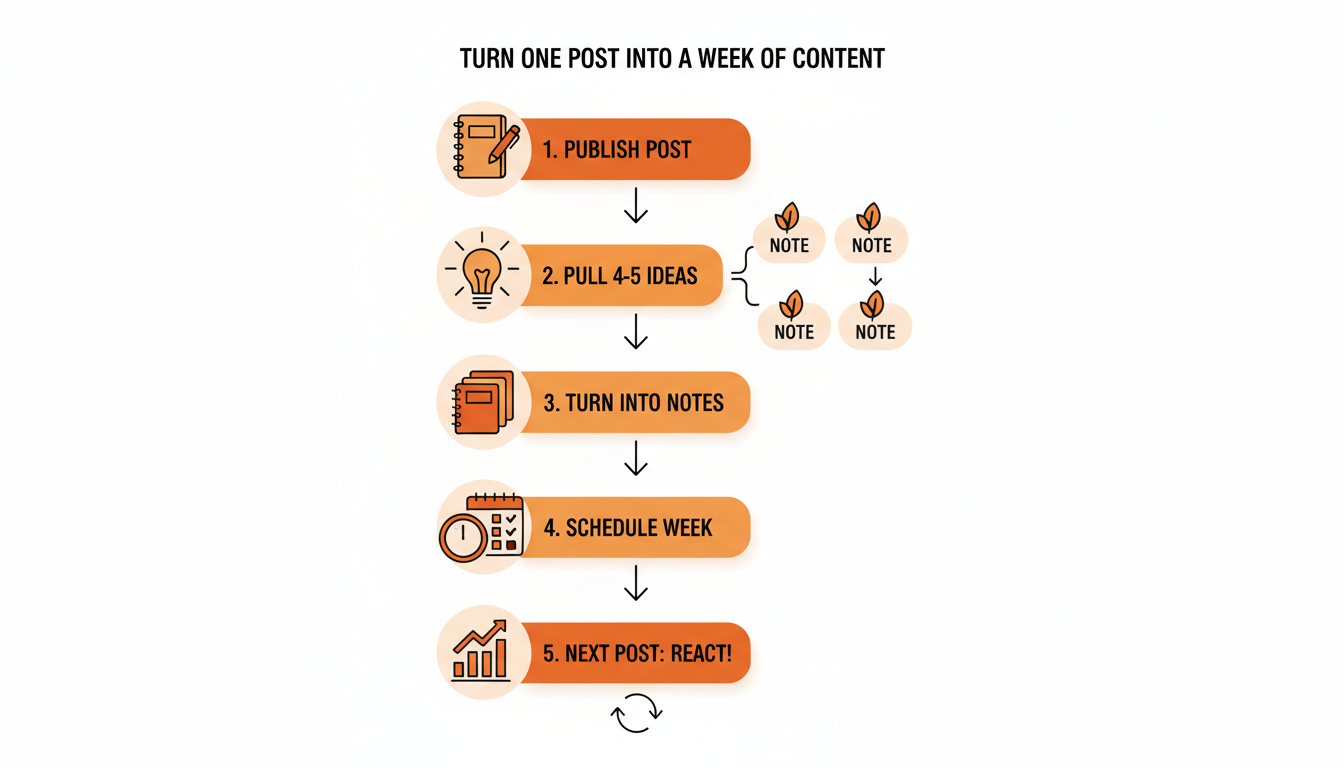
One published post breaks down into a handful of Notes, a couple of comment replies worth expanding into their own thought, and sometimes a follow-up post answering a question a reader asked in response. Treat the original post as raw material for the rest of the week instead of a finished, closed thing. This is exactly the workflow WriteStack's Note generator is built for: point it at a post you already published, and it drafts the Notes version of each idea inside it, so repurposing takes minutes instead of becoming its own writing project.
What to Expect at 0, 100, 500, and 1,000 Subscribers
Knowing roughly what each stage looks like helps you judge your own progress against reality instead of against someone else's highlight reel.
| Subscribers | What usually got you here | What changes next |
|---|---|---|
| 0-100 | Personal network, a couple of shares, maybe one lucky restack | Almost no organic discovery yet. Every subscriber is one you asked for directly. |
| 100-500 | Consistent posting, early Notes habit, first recommendation or two | Notes start reaching non-subscribers occasionally. Growth is still mostly manual. |
| 500-1,000 | Multiple recommendations, a guest post or cross-promotion, a reliable posting schedule | Substack's own discovery surfaces start contributing a real share of new subscribers. |
| 1,000+ | All of the above, sustained for months | Compounding kicks in: existing subscribers refer readers, back catalog gets discovered, recommendations from other writers keep arriving without you asking. |
Practical rule: if you're stuck at the same number for six or more weeks, the fix is almost never a new tactic. It's usually that one of the earlier steps (niche clarity, posting frequency, or a Notes habit) never actually got consistent in the first place.
The Tools That Remove the Friction
None of this requires talent you don't have. It requires a posting schedule that survives a busy week, a Notes habit that doesn't depend on remembering to open the app every morning, and enough visibility into what's actually working to stop guessing.
That's the specific gap WriteStack is built to close. It schedules your Substack Notes in advance instead of asking you to post live every day, drafts new Notes from posts you've already published so the daily habit isn't a blank page, and shows you benchmarks against publications at a similar size instead of just your own numbers from last week. The writers who cross 1,000 subscribers fastest usually aren't the most talented ones in their niche. They're the ones who kept the schedule long enough for the mechanics above to start working in their favor, and who had enough visibility into their own numbers to know what to keep doing.
Load your first week of Notes into WriteStack today, schedule them, and go back to writing the post that actually grows your list.